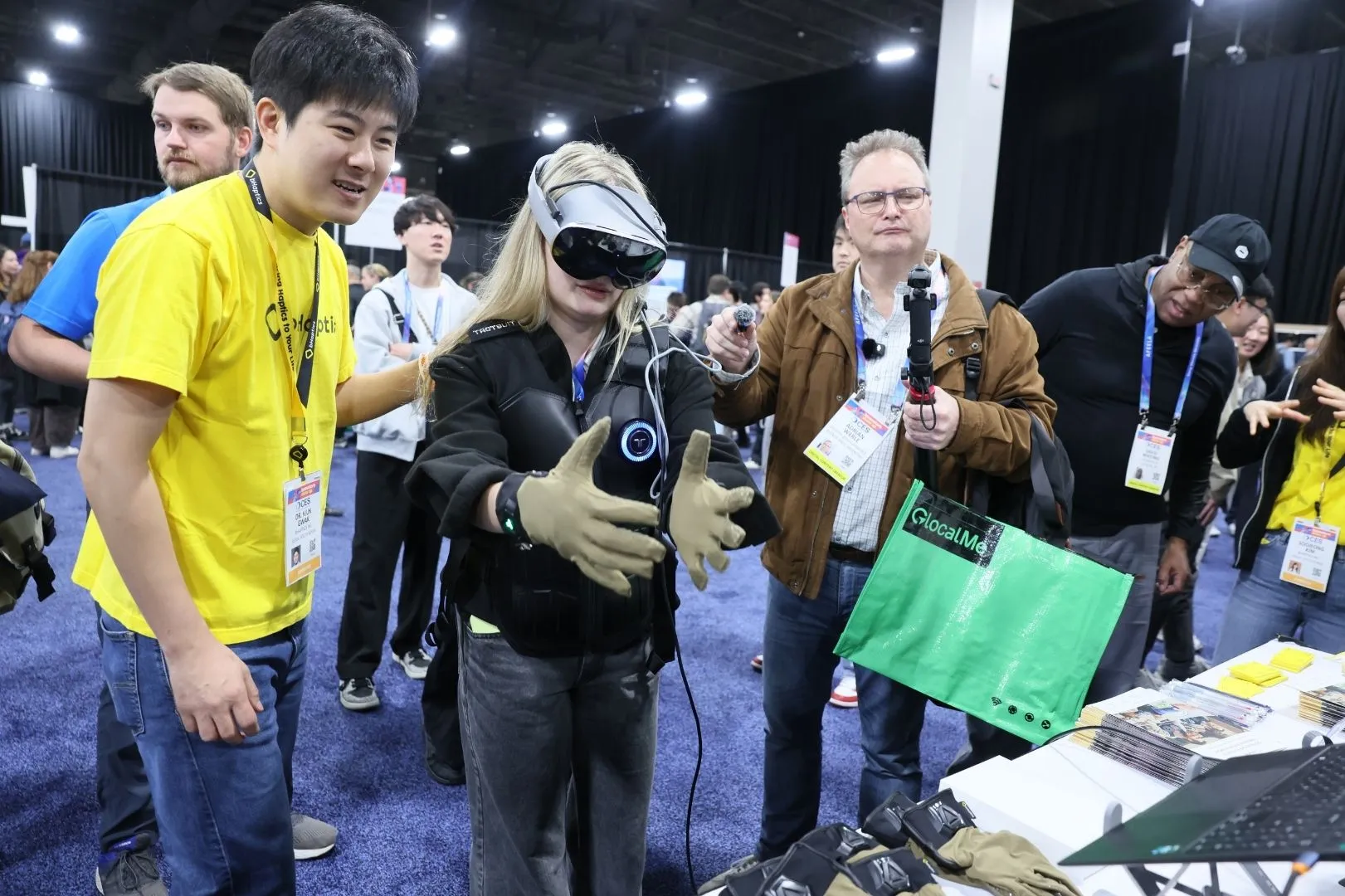
CES 2026 just wrapped up in Las Vegas, and the theme was unmistakable: physical AI has arrived.
From Boston Dynamics partnering with Google to train humanoid robots, to robot vacuums that climb stairs, to Ford's AI assistant launching in 2027 vehicles, this year's announcements showcased products that don't just run code. They learn, adapt, and interact with the unpredictable real world.
And that's exactly why these products will live or die based on their beta testing programs.
The Products That Stole the Show
Robotics everywhere. NVIDIA positioned itself as "the Android for generalist robots" with its Alpamayo AI models for autonomous vehicles. Boston Dynamics and Google demonstrated their Atlas humanoid robots. Segway launched robotic lawn mowers. Robot vacuums now navigate staircases.
AI assistants get smarter. Amazon expanded Alexa+ across web and mobile, while Ford debuted an AI assistant powered by Google Cloud. AMD's Ryzen AI 400 processors promise to bring AI capabilities directly to personal computers.
Smart home evolution. Samsung, LG, and others unveiled micro RGB displays with brighter, more adaptive screens. Lego showed off Smart Play System bricks with interactive capabilities. Everything is getting connected, contextual, and personalized.
What CES 2026 Products Have in Common
Every major announcement shared a common thread: these aren't static products. They're systems that:
- Learn from user behavior and adapt over time
- Interact with unpredictable environments (your home, your car, your lawn)
- Make probabilistic decisions rather than following rigid rules
- Fail in ways that are hard to reproduce in controlled lab settings
A robot vacuum that climbs stairs sounds impressive on a demo stage. But what happens when it encounters your specific staircase, with the weird carpet edge, the dog toys, the toddler running around?
An AI assistant that handles natural language is magical in a keynote. But how does it perform with regional accents, background noise, or ambiguous commands?
These questions don't get answered in internal QA. They get answered in real homes, with real users, doing real things.
Why Lab Testing Isn't Enough Anymore
Traditional product testing assumes predictable inputs and outputs. Give it X, expect Y.
AI-powered products don't work that way. They're probabilistic. They might give three different (but equally valid) responses to the same input. They improve (or degrade) based on the data they encounter.
The robot vacuum's navigation algorithm might work perfectly on your test floor, then fail catastrophically on a dark hardwood surface it never trained on. The AI assistant might understand your engineering team's speech patterns but struggle with customers who speak differently.
You can't test for this in a lab. You need diverse, real-world environments and the infrastructure to capture what goes wrong.
What Smart Teams Do Differently
The companies that will win with these CES innovations aren't just building better algorithms. They're building better testing programs.
Diverse beta cohorts. If your robot vacuum only gets tested in suburban California homes, you'll miss the edge cases that matter in Boston brownstones or Florida humidity. Quality over quantity matters when recruiting testers.
Structured feedback capture. When an AI assistant misunderstands a command, you need more than "it didn't work." You need the exact audio, the context, the confidence score. Everything required to reproduce and fix the issue.
Extended testing timelines. AI products can drift over time as usage patterns change. Your beta program needs to catch degradation before your customers do.
Monitoring infrastructure. The best beta programs don't end at launch. They transition into ongoing monitoring that catches issues as products learn and evolve.
The Bottom Line
CES 2026 showed us where consumer technology is headed: smarter, more adaptive, more autonomous. These products will deliver incredible experiences when they work.
When they don't? The failures will be more visible, and more frustrating, than ever.
The difference between a successful AI product launch and a PR disaster often comes down to one thing: whether you found the edge cases before your customers did. That's how beta testing will drive these go/no-go decisions.
Ready to build a beta testing program that can handle AI-powered products? Schedule a demo with Centercode below to see how leading companies test the products of tomorrow.