Last week, Centercode brought together product leaders in Irvine for the Product AI Summit. Over three days, practitioners from product teams, software platforms, and consumer electronics companies shared what AI is actually changing about how products get built. Here's how the week unfolded.
Wednesday: A Workshop And A Welcome Dinner
The best way to understand what AI can do for your team is to see the possibilities laid out in front of you.
The summit kicked off on Wednesday at Centercode HQ in Laguna Hills with a session led by Travis Johnson, Anthropic Ambassador and co-founder of AuraPath AI. Travis gave attendees an orientation to Claude's suite of products, including Claude Desktop, Claude Code, and Cowork, with product teams as the explicit audience. It was a grounding look at the landscape before the main conversations began.
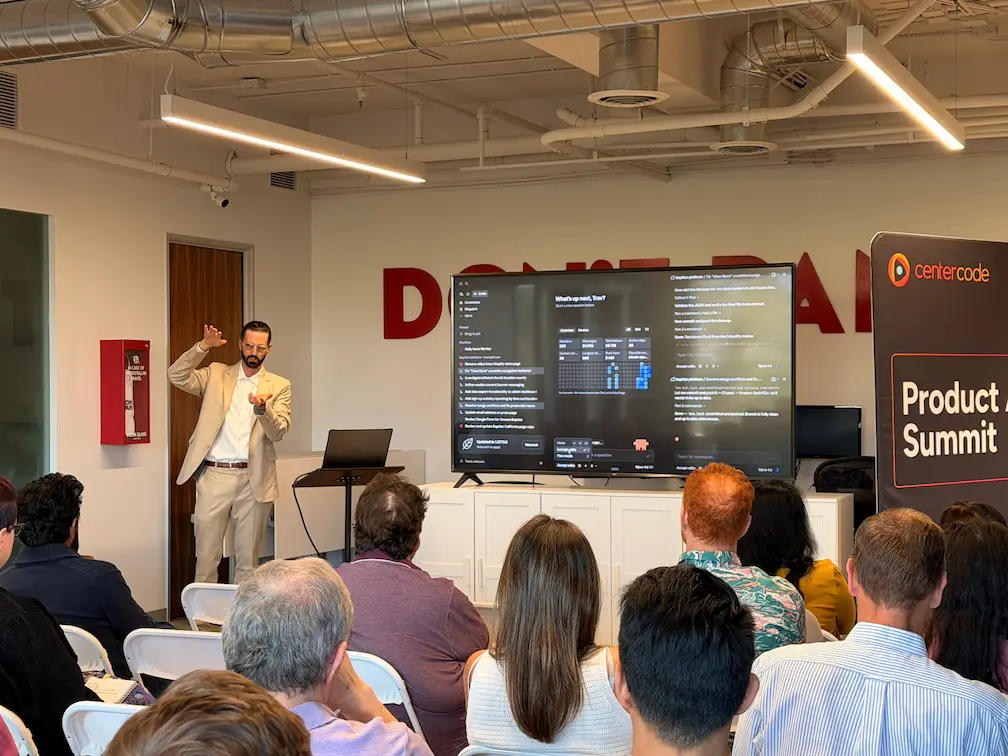
After the session, the group moved into happy hour and a taco bar dinner. Attendees connected over tacos and a few early winners walked away from the raffle with a Plaud device, connected home products, and gift cards. The conversations that started over dinner carried into the rest of the week.
Thursday: The Main Stage
Six planned sessions, one unplanned one, and a full day of honest conversation about where product development is headed.
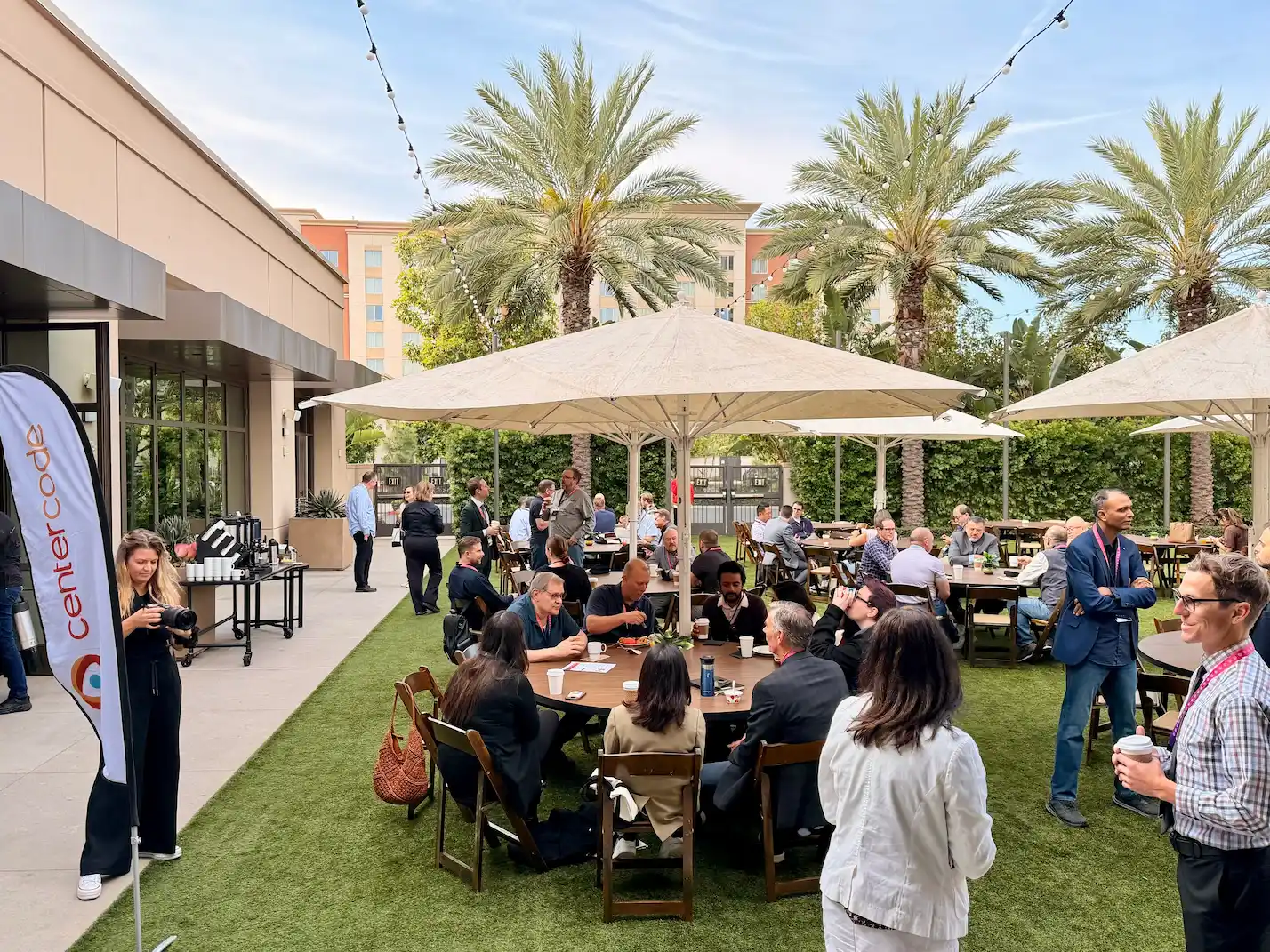
Thursday was the main event, held at the Marriott Irvine Spectrum. The speakers brought different vantage points on AI and product, from consumer electronics to software platforms to development methodology.
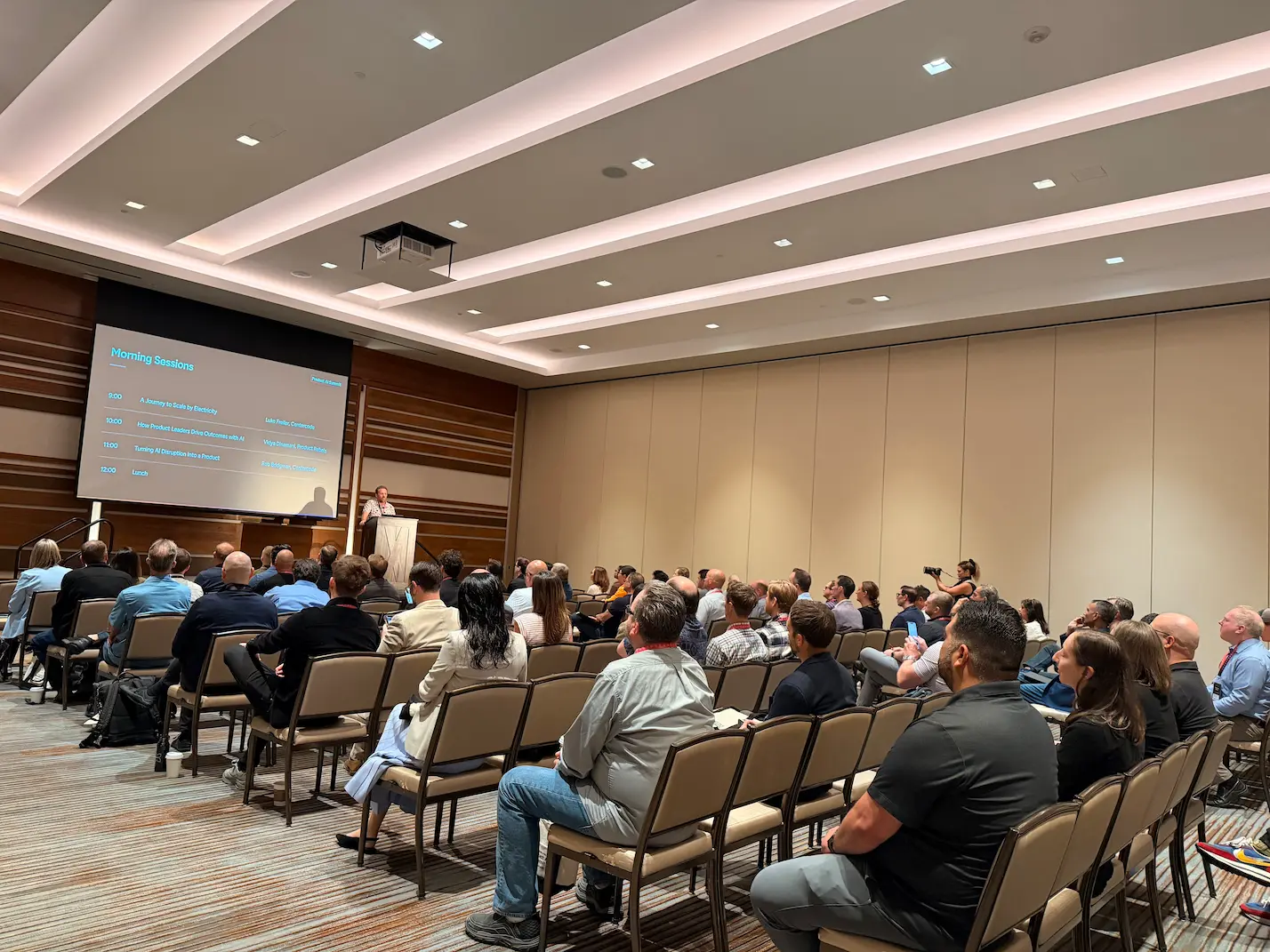
Luke Freiler: The knowledge gap is gone, now what?
Luke opened the day with a keynote built around a single observation: "I never had to not know anything ever again."
The point isn't that AI makes anyone smarter. The knowledge gap, the thing that used to slow teams down and create weeks of lag, is simply closed. What that changes is where the real work lives. Luke's framing: everyone is now a virtual manager to a team of AI agents, and your value is the aggregate of your team's output. The skills that determine how good that output is are the same ones that always mattered most: communication (prompting upstream, storytelling downstream), curiosity (agents don't self-direct or wonder), critical thinking (if you can't evaluate the output, you're a rubber stamp), and creativity (the gap between great work and AI slop isn't generation, it's vision and taste). "That's not my job" is the most dangerous sentence in the AI era.
Vidya Dinamani: Are you solving the right problems?
Vidya Dinamani, Co-Founder of Product Rebels, challenged a comfortable assumption: that your team is already aligned on what customer problems you're solving. She's seen enough product teams up close to know that this alignment is far rarer than most leaders think.
Her challenge for the room was to measure retention and NPS instead of ship dates and feature counts. Output metrics are easy to hit. Outcome metrics require staying close to the customer, and no amount of AI changes that requirement. If anything, AI makes the gap between teams who do it and teams who don't more visible.
Rob Bridgman: Building a good product is actually hard
Rob Bridgman, from Centercode's Labs team, opened with a problem the room recognized immediately: AI summaries and AI search had gutted Centercode Labs' organic traffic. Content that had driven consistent discovery for years stopped working almost overnight as AI absorbed the queries before users ever clicked through. His team's response was to stop fighting for search rankings and start building interactive tools instead of static content. That decision is what led to Centercode Labs.
From there, his team launched a Labs and Learn program: every member of the product and engineering team built something, and roughly 30 apps emerged in about two weeks.
What they expected to be the problem was code quality. That turned out not to be the issue at all. A solid design system and code linting kept things on rails. What suffered was product quality. "Building a good product is actually hard," and the experience of building fast with AI had made the team temporarily forget how much product judgment actually requires. They ran a Polish, Refactor, Kill pass on everything: some apps were refined, others were cut entirely because they didn't solve real problems. One standout was Sprint Survivors, a time-survival roguelite game they built and shipped as a Christmas gift to the community, then collected feedback on using Centercode's own platform. The big lesson: "We compressed years of Product Management experience into weeks of time."
Jacob Faarkrog Christensen: Managing product feedback with AI
Jacob Faarkrog Christensen, Customer Validation Lead at Bang & Olufsen, started with what feedback management actually looks like before you do anything about it. PMs open every item, read the full thread, manually write a summary for stakeholders, categorize the issue, draft a reply, and move on to the next one. At any real volume, you fall behind. Testers submit and hear nothing. The pile grows faster than anyone can work through it.
His team used AI to compress that process. Triage time dropped from 15 to 20 minutes per item down to 1 to 3 minutes. That is not a marginal efficiency gain. At that scale of reduction, you're not just moving faster through the same work. You're changing what a day can actually contain, and you're changing what the experience feels like for the testers on the other end.
That is where his framing for the goal came in: feedback collection should feel "like stepping onto an escalator." Testers get carried through the process instead of fighting it every step of the way. When that friction disappears, you get more feedback, better feedback, and a team that can finally keep pace with what is coming in.
Brad Day: Design now feels like a conversation
Brad Day, from Centercode's product team, opened with a fact he stated deliberately: he has zero coding experience. What he showed the room was how a non-technical PM could use AI to design, iterate on, and validate features without getting stuck in the traditional back-and-forth with engineering.
The shift he described: design used to be a handoff. A static spec would move from product to engineering, someone would interpret it, and then weeks would pass asking whether this was what anyone actually meant. With AI-generated interactive prototypes, that whole category of miscommunication disappears. Design becomes a conversation. Brad walked through how this process shaped several of Centercode's recent AI features, building a repeatable workflow that any PM could own regardless of technical background.
Brennan McEachran: The new AI-native software factory
Brennan McEachran closed the afternoon sessions with the sharpest challenge of the day: "If you're optimizing today's processes for today's AI, you're already behind."
His argument is that AI-native teams are not the ones who added AI tools to existing workflows. They're the ones who rethought the workflow entirely. The new development loop he described runs Aim, Search, Prove, Ship, Sense. Humans own Aim, setting the direction and staying accountable for what gets built. AI handles most of the heavy lifting in between. The Sense phase, staying connected to how the product is actually landing with real users after it ships, is the one most teams still skip. That was costly before AI. With the pace AI enables, it's significantly more costly now.
Centercode's 25th Anniversary Dinner
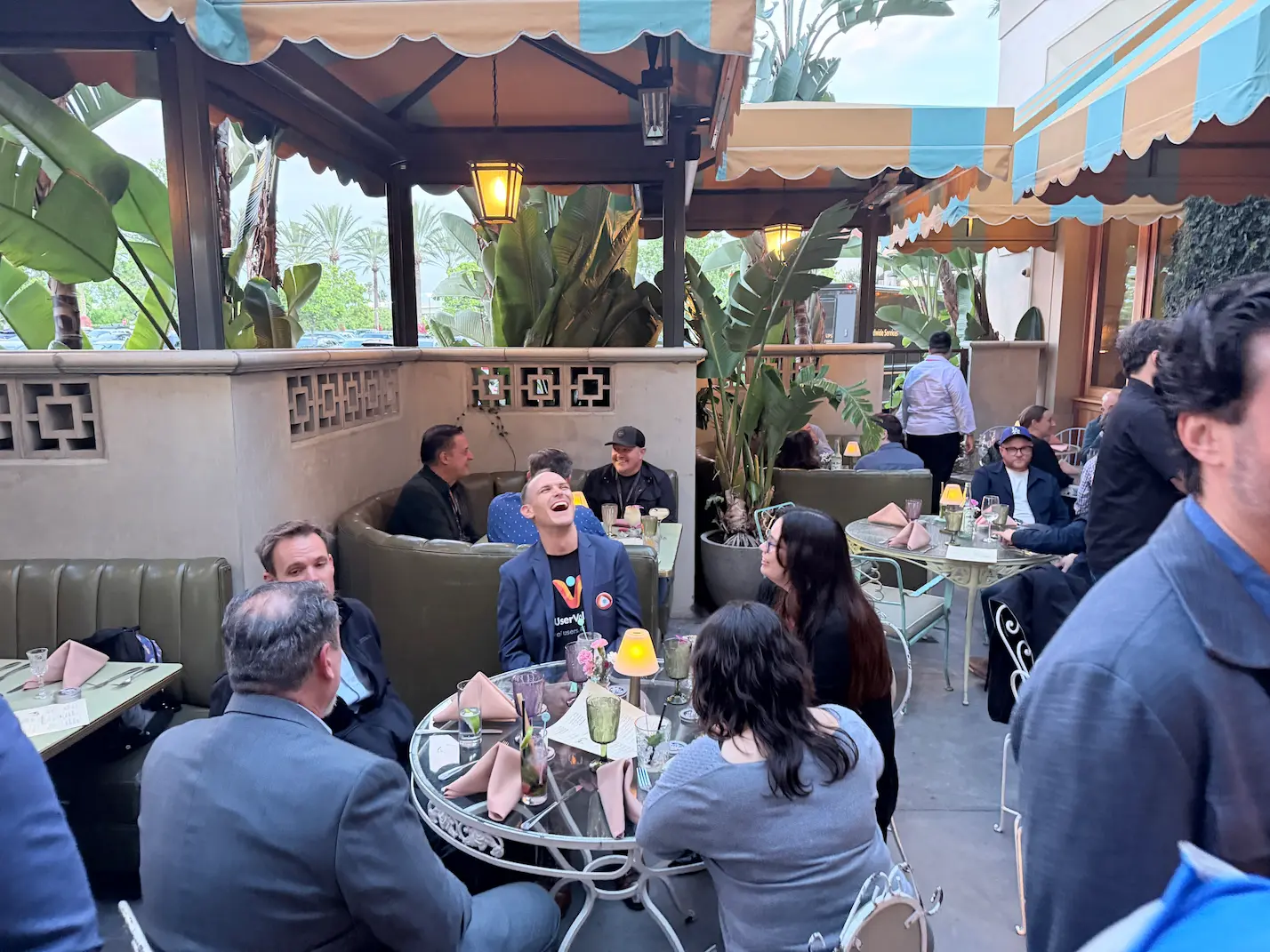
The evening closed with an anniversary dinner at Habana in Irvine Spectrum Center. Centercode turned 25 this year, and the dinner felt like the right place to mark it. Twenty-five years is a long time in a space that tends toward short memory. It means watching enough technology waves arrive and recede to know what a real shift looks like from the outside and from the inside. The people in that room had spent the day absorbing a lot of new ideas and hearing honest accounts from people in the middle of the work. The dinner was a chance to slow down, sit with each other, and recognize what it means to be in this industry at this particular moment.
Friday: Goats And Mozzarella
The best conversations happen away from the conference room.
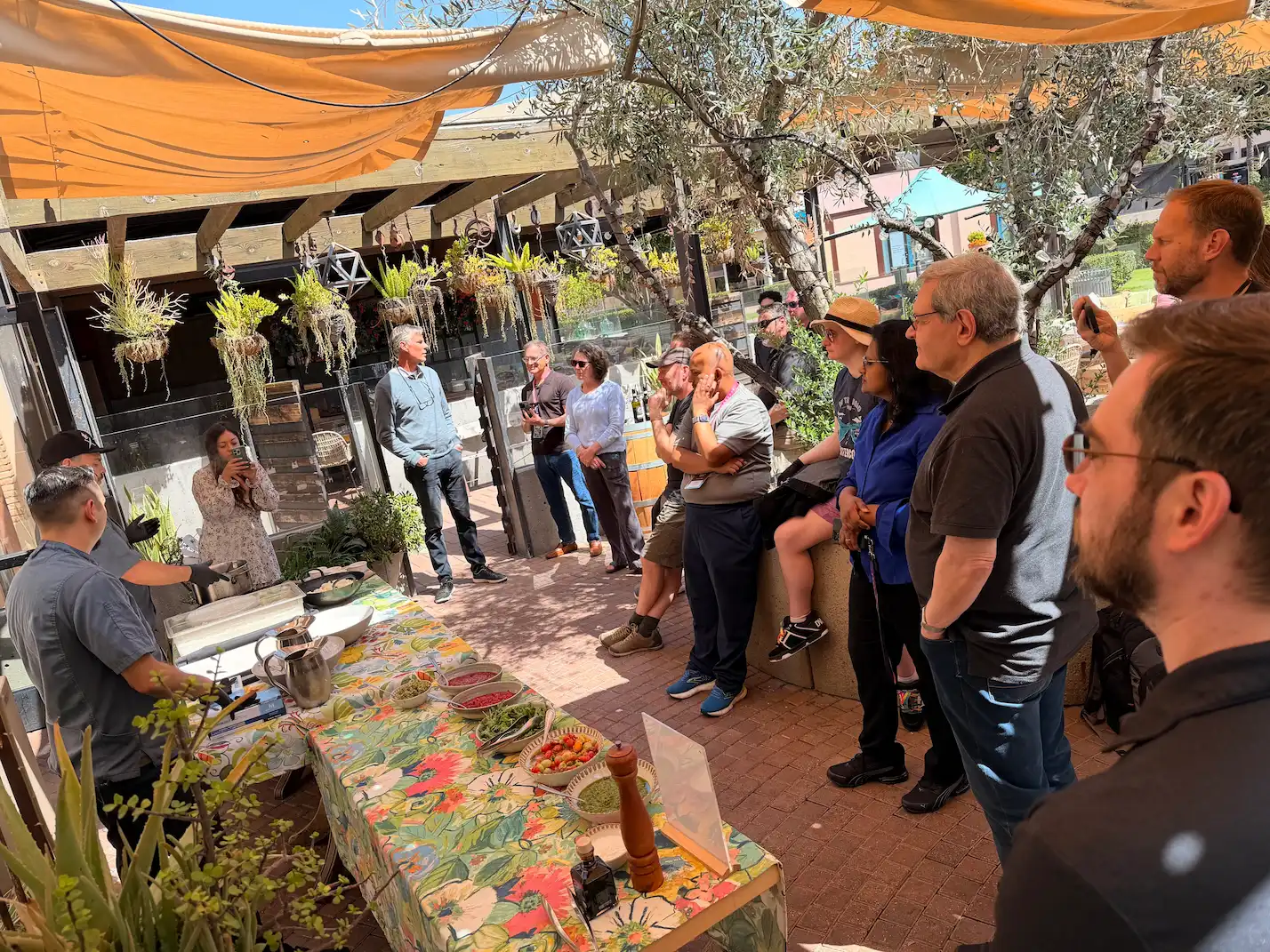
Friday was deliberately unstructured. Attendees split between two off-site activities: baby goat yoga at Hana Field in Costa Mesa, and a fresh mozzarella demo and wine tasting at Cucina Enoteca in Irvine Spectrum. Both groups made it back in good spirits.
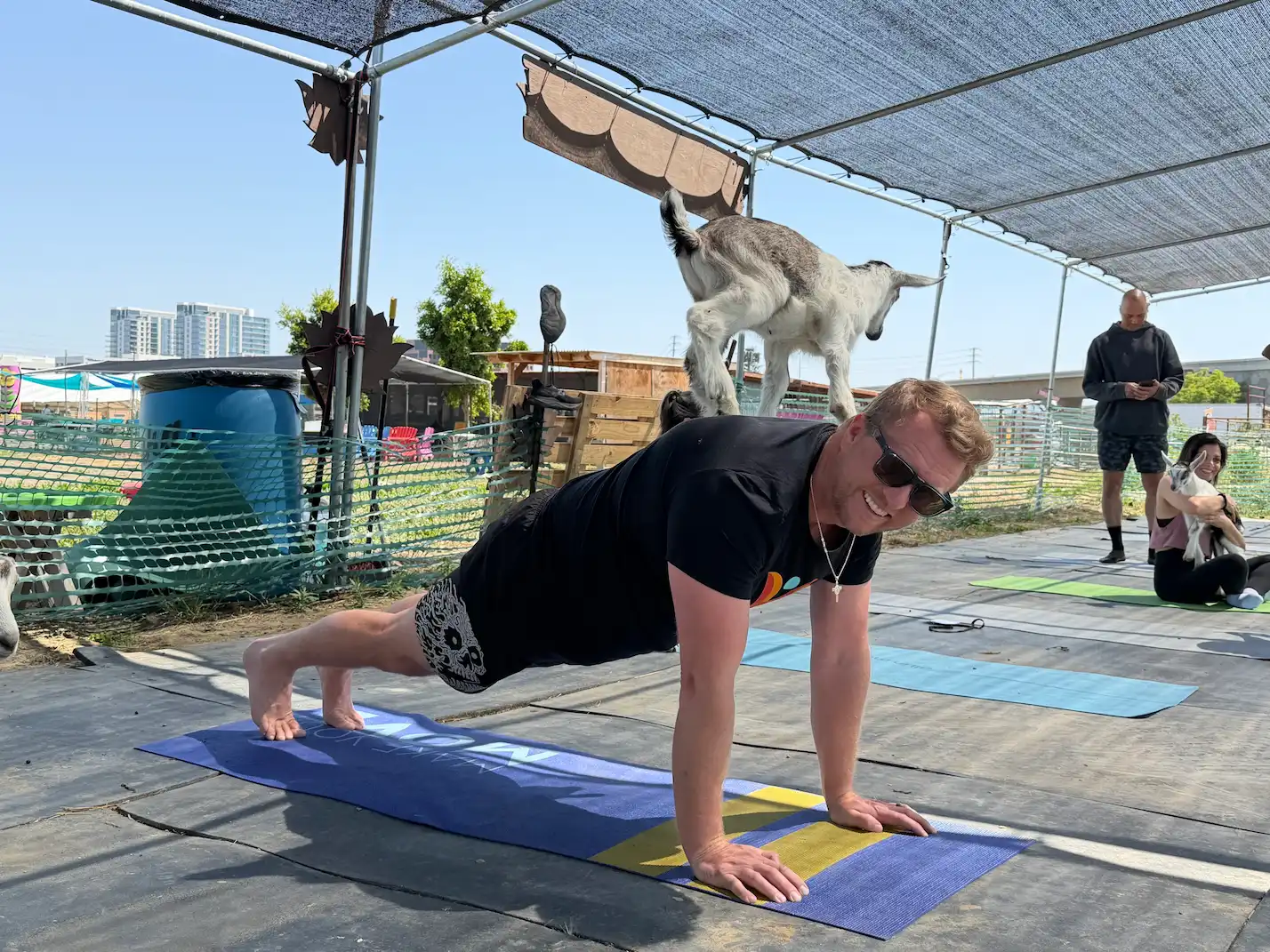
Ending a summit with something that has nothing to do with product development is an intentional choice. The conversations that happen when people are not in session mode tend to be the ones that last longest.
---
Thank you to every speaker, attendee, and team member who made the Product AI Summit possible. If you joined us this year, we hope you left with at least one thing you could put to work immediately. If you missed it, keep an eye out for what's next.